AI Humanizer vs Paraphraser: Which One Do You Need?
A humanizer and a paraphraser sound similar but do different jobs. Here is the plain difference, and how to pick the right one for what you are writing.
Students mix these two up all the time, and it is an easy mistake: both take your text and hand back a rewrite. But they solve different problems, and reaching for the wrong one either wastes your time or leaves the actual issue unfixed.
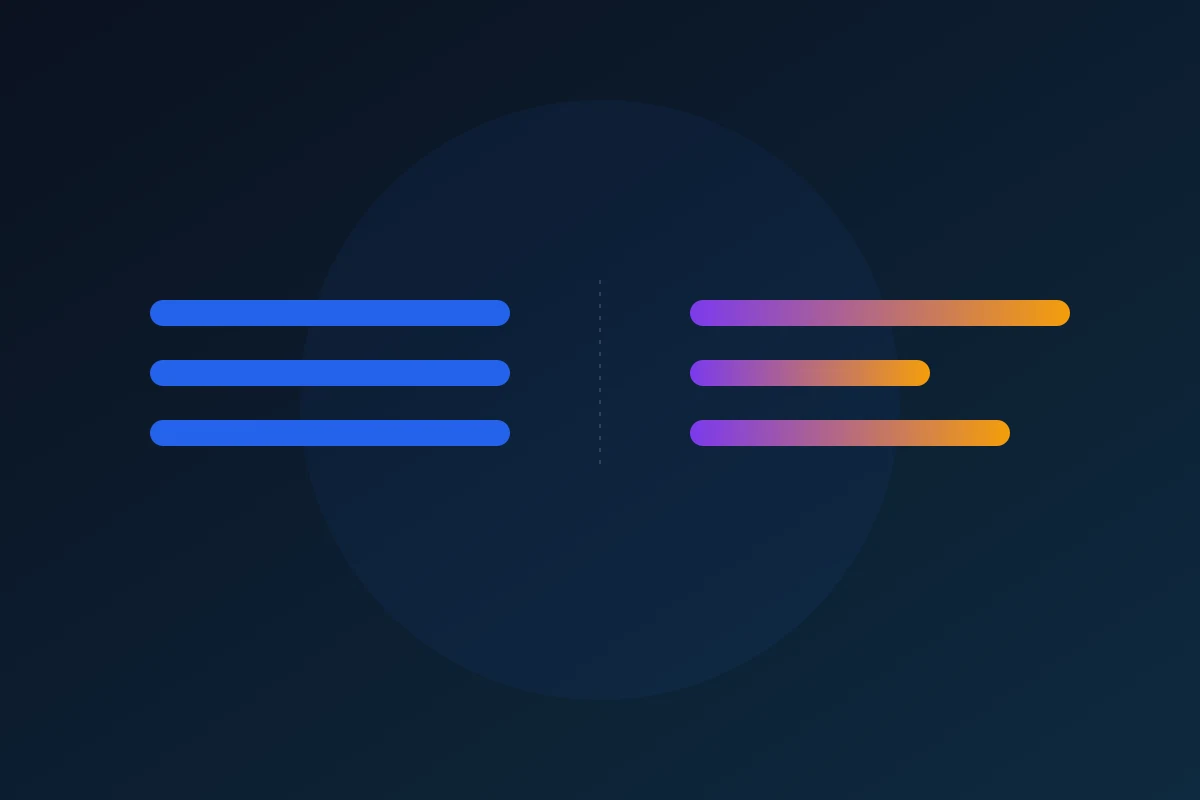
The short version: a paraphraser changes the WORDS; a humanizer changes the FEEL. A paraphraser rewords an idea, usually so you are not copying a source or to hit a length. A humanizer takes writing that is grammatically fine but flat or robotic and makes it read like a real person wrote it, with natural rhythm and your own voice.
What a paraphraser is for
A paraphraser is about saying the same thing in different words. Reach for it when the meaning is fine but the wording needs to change.
- Putting a source into your own words, so you are not copying its phrasing. You still cite it: rewording someone's idea does not make it yours.
- Varying your phrasing when you have repeated yourself or leaned on the same sentence shape.
- Shortening or simplifying to hit a word count, or to unstick a sentence you cannot quite phrase.
What a humanizer is for
A humanizer is about how the writing sounds. The words might be yours already; the problem is that it reads stiff, generic, or machine-smoothed, and you want it to sound like you.
- Fixing a draft an AI 'cleaned up' into something that reads like a corporate memo.
- Making a translation of your own work read like natural English.
- Warming up correct-but-flat writing so it sounds like a person, not a template.
Original: The results were significant and supported the hypothesis. → Paraphrased (different words): The findings were meaningful and backed up what we predicted. → Humanized (different feel): The results held up. Every run matched the prediction. Same meaning; the paraphrase swaps the vocabulary, the humanize changes the rhythm.
Free and no sign-up: paste a flat draft and the AI Humanizer rewrites it in your own natural voice.
AI Humanizer →Paste a paragraph. It scores instantly, in your browser, free.
A quick guide, not proof. Careful, formal, or non-native writing can read as AI; the full detector explains why.
Which one do you need?
- Need to say something differently, or reword a source in your own words? Paraphraser.
- Reads robotic, flat, or just not like you, even though the words are yours? Humanizer.
- Both problems at once? Paraphrase first to fix the wording, then humanize to fix the voice.
On Domicad both tools are free, and both can carry your Personal Voice, so a paraphrase and a humanize are trained on the same you and can be used back to back on the same draft.
Free and no sign-up: paste a flat draft and the AI Humanizer rewrites it in your own natural voice.
AI Humanizer →