How Many Pages Is 1,000 Words? (Words to Pages, Any Length)
How many pages a word count fills, double- or single-spaced, with a live words-to-pages tool and a quick reference table for 250 to 5,000 words.
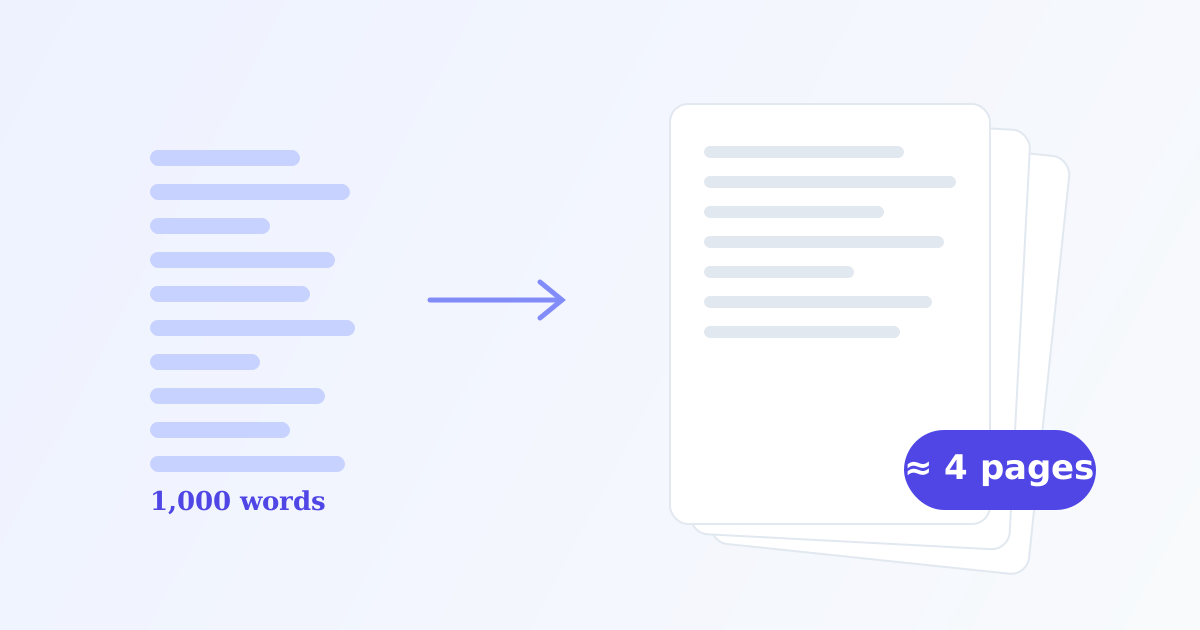
When an assignment is set in words but you think in pages — or the reverse — you need a quick way to convert between the two. The honest answer is that there is no exact conversion, because a page holds a different number of words depending on the font, the size, the margins, and above all the line spacing. But for the standard classroom setup — a 12-point serif or sans-serif font like Times New Roman or Arial, with one-inch margins — the rules of thumb are steady enough to plan around.
The two figures worth memorising: a single-spaced page holds about 500 words, and a double-spaced page holds about 250. Since most essays are double-spaced, that means roughly 250 words per page. So 1,000 words is about four double-spaced pages, and a 500-word response is about two. Type any count below to see it both ways.
Type a word count. Pages update live — at 12pt with 1-inch margins.
An estimate at 12pt with 1-inch margins — real length shifts with font, size, and spacing.
Words to pages, at a glance
Using the standard 12-point, one-inch-margin setup, here is what common word counts come to. The first number is double-spaced (the usual essay format); the second is single-spaced.
- 250 words — about 1 page double-spaced (½ page single-spaced)
- 500 words — about 2 pages double-spaced (1 page single)
- 750 words — about 3 pages double-spaced (1½ pages single)
- 1,000 words — about 4 pages double-spaced (2 pages single)
- 1,500 words — about 6 pages double-spaced (3 pages single)
- 2,000 words — about 8 pages double-spaced (4 pages single)
- 2,500 words — about 10 pages double-spaced (5 pages single)
- 3,000 words — about 12 pages double-spaced (6 pages single)
- 5,000 words — about 20 pages double-spaced (10 pages single)
Paste your writing and see the word count — and roughly how many pages it fills — instantly, free.
Word Counter →What changes the page count
Treat the numbers above as a planning estimate, not a guarantee. Four things move the real page count, sometimes a lot:
- Line spacing — the biggest lever. Double spacing roughly doubles the pages compared with single, and 1.5 spacing lands in between.
- Font and size — a 12-point Arial runs a little longer than a 12-point Times New Roman, and moving from 11 to 12 point adds pages across a long document.
- Margins — the default one inch is assumed here; wider margins mean fewer words per page and more pages.
- What is on the page — headings, block quotes, a bibliography, tables, and figures all break up the text and stretch the page count beyond a pure words-per-page estimate.
If you are aiming for a page target
When a rubric asks for a number of pages rather than words, convert it into a word goal you can actually track while writing. For a standard double-spaced page, multiply the target pages by about 250 to get a rough word count — a “four to five page” essay is roughly 1,000 to 1,250 words. Then write to the word goal, because word count is the honest measure of how much you have actually said. Padding an essay to fill pages with wider margins, bigger fonts, or filler sentences is easy for a marker to spot and rarely helps your grade.
Whichever way your assignment is set, the move is the same: pick the format your instructor specified, use the estimate to plan, and check the real length in your word processor before you submit.
Paste your writing and see the word count — and roughly how many pages it fills — instantly, free.
Word Counter →